
)
Lifting in logistics: Ports and terminals
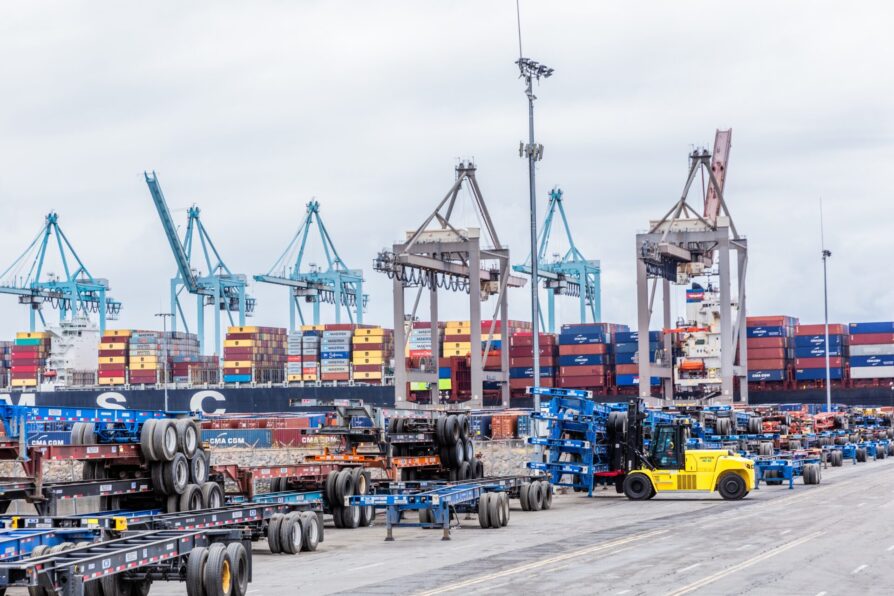
ILH explores the vibrant market for lifting equipment in ports and terminals, finding a sector that is both robust and resilient.
With shipping once again in the headlines due to the Gulf crisis and US tariffs, it would be easy to assume that demand for lifting and material handling equipment in ports would decline. However, ports and terminal operators tend to take a much more long-term view, meaning the sector is still in good health.
Impressive resilience
The latest market data demonstrates that even the Gulf crisis did not dampen demand for container shipping. Market analysts Container Trade Statistics (CTS) reported that volumes remained high despite the closure of the Strait of Hormuz.
“Despite these significant geopolitical challenges, global volumes remained remarkably resilient, reaching 16.2 million TEUs in April 2026,” it said. This represents a 4% increase compared to April 2025, and a 1.6% month-on-month rise from March 2026.
“More importantly, year-to-date volumes remain strong, standing 5% above 2025 levels,” it added. “This reinforces a long-standing maxim of global trade: cargo behaves much like water, finding alternative routes when traditional pathways become restricted.”
Shipping prices soared by 12% compared to March, representing the largest monthly increase since the height of the Red Sea crisis in June 2024. “As we move into the second quarter of 2026, it is clear that the Gulf Crisis is having an immediate and significant impact on freight pricing, yet global volumes continue to demonstrate remarkable resilience,” it said. “While volumes have softened slightly in affected regions, overall trade remains robust.
“History has shown that trade doesn’t stop altogether during periods of geopolitical disruption. Instead, cargo is redirected, often creating new opportunities for previously smaller markets. These emerging trade lanes are now becoming an increasingly important contributor to the strong volume performance seen across the industry.”
Key trends
For Liebherr Maritime Cranes, success is about listening to customers, not chasing trends. “We focus on observed customer requirements rather than broad market forecasts,” it says. One of the clearest developments is the demand for equipment that can remain productive across different cargo profiles without reconfiguration of the terminal itself.”
As an example, it cites PD Ports in Teesport, UK, where a Liebherr LPS 550 is used across bulk cargo operations while still maintaining compatibility with a port handling containers and project cargo.
It delivered a third electric LPS 550 in May 2026, which it says was based on the existing cranes’ operational track record. “The terminal had already relied on Liebherr cranes for bulk operations and chose to expand capacity using the same platform. The decision was driven by reliability in daily operations, including stable cycle performance and predictable handling across mixed cargo streams.”
The addition of the third crane was not tied to a single cargo segment. It was a capacity decision across multiple cargo streams, with emphasis on berth flexibility and reliability under peak demand.
Beyond this, reliable, repeatable performance is key. “Ports handling tens of millions of tonnes per year require equipment that maintains handling rates over long operating cycles rather than peak specification values,” it adds.
At Teesport, the LPS 550 supports operations that handle approximately 26–28 million tonnes annually, with operational decisions driven by the consistency of crane performance across shifts and cargo types.
“We also see continued interest in applications that combine bulk, breakbulk and container handling within the same terminal footprint,” says Liebherr. “In those cases, the buying decision is not based on a single use case. It is based on the ability of the equipment to support multiple revenue streams with one installed asset.
“As an OEM, we do not attribute growth to a single factor. We respond to these operational requirements by designing equipment that maintains utilisation across varied and changing conditions.”
Like other aspects of lifting equipment, this market segment is moving towards lower carbon power trains.
Lift truck manufacturer Kalmar says this market is growing rapidly. According to its investor presentation in March, about 63% of its customers plan to invest in zero or low emission trucks by 2028.
Three other significant trends it notes are capacity, versatility, and digitalisation.
“There is a persistent need for greater capacity, particularly in heavy logistics, as larger and heavier components such as offshore wind turbine generators and tower sections require specialised lifting equipment, says Aino-Leena Juutinen, director, marketing and communications, counter balanced, Kalmar.
For product adaptability, she says the ability to easily change attachments and handle diverse cargo remains critical for smaller terminals and general efficiency. “Other significant trends include the movement toward intelligent operations, with increasing use of automation and digitalisation to enhance safety and productivity,” she adds.
Hyster is also seeing demand for its high-capacity electric forklifts, the J10-18XD lithium-ion lift trucks, as operators seek to drive down equipment emissions. “With a capacity to lift up to 18-tonnes, this makes them a great fit for ports and terminals looking to make the switch from diesel-powered forklift trucks to an electric fleet,” says Ricky Hiriani, global commercial product leader, big trucks & port equipment, Hyster.
Hyster has focused on making performance comparable to an ICE alternative and offering scalable battery options to match duty cycle and charging requirements
“The increasing push toward electrification is one factor compelling many ports to re-evaluate their fleets,” adds Ricky. “High-capacity trucks demand high energy input, which lithium-ion technology can supply without overheating or losing efficiency,” he adds.
When it comes to flexibility, Hyster is seeing more applications for its ReachStackers outside of container handling. It says they are increasingly favoured for breakbulk operations, especially when paired with tool changers that enable rapid attachment swapping. “High-capacity forklifts with quick-disconnect carriages, coil rams or magnets extend this multipurpose capability,” adds Ricky. “This flexibility helps ports avoid over-investing in single-task equipment, particularly when cargo mixes and volumes fluctuate.”
Beyond, that, cargo safety is more important than ever, especially in a breakbulk sector that is handling high-cost parts for wind turbines. “Protecting cargo is paramount, particularly in breakbulk where one wrong clamp setting can destroy high-value goods,” says Ricky.
Several solutions can help address this challenge, such as specialised clamps, fork protection sleeves and four-fork attachments that distribute load pressure more evenly to protect cargo. Back-up cameras can also record impacts for later review and continuous process improvement. “Hyster lift trucks are also customisable with other technology solutions that can help prevent impacts with containers or other trucks as well as detect potential hazards in the travel path,” he adds.
This versatility extends to customised solutions. Hyster cites a steel handling terminal that required high-capacity forklifts inside a vessel hold. Hyster engineers developed a tailored lift truck fitted with heavy-duty magnets powered by an onboard generator. “This eliminated the need for wooden dunnage, increased storage density and, most importantly, kept pedestrians out of the hazardous hold during loading and unloading,” says Ricky.
Staying mobile
Mobile harbour cranes also offer versatility for smaller operators dealing with a wide variety of cargo.
Liebherr recently reported a leading market share in in this segment, which it says is due to consistency. “Customers select our mobile harbour cranes because they deliver consistent performance in real operating conditions, not only in specification sheets,” it adds. “That is typically proven over time and reflected in repeat orders.”
A recent example is Seaboard Marine in the USA where Liebherr delivered three electric LHM 550 cranes in January 2026 for operations in Port Miami and the Port of Houston. “This was not a first-time purchase,” it says. “The order builds on a partnership that dates back more than two decades and adds to an existing fleet of Liebherr cranes already in operation.”
The buying decision was based on demonstrated performance in throughput, uptime and integration into high-volume container and multipurpose operations.
“From an OEM standpoint, market share is the result of these operational decisions at terminal level. Customers return to the same equipment platform because it has proven its value in service. That is where selection decisions are ultimately made.”
A key trend in this segment is electrification. “From our data, demand for electrically powered mobile harbour cranes has increased significantly, with a 400% rise between 2019 and 2025,” says Liebherr. “This reflects a clear shift in procurement discussions.”
Liebherr Maritime Cranes has more than 25 years of experience in electric drives. “This long-term experience informs both the technical design of our systems and the way we support customers in integrating electric operation into their infrastructure,” it adds.
While electric drive has become a standard consideration in many projects, it still depends on site-specific conditions such as power availability and operating profiles. Liebherr therefore continues to deliver cranes with hybrid or backup configurations where required. “Ports operate under different infrastructure constraints, and reliability remains the primary requirement,” it says.
However, the sustainability case for all-electric is unquestionable. “Under certain conditions, it can reduce CO₂ emissions by up to 100kg per hour compared to diesel-driven cranes, while also eliminating fuel consumption during idle periods,” says Liebherr.
“Our role is to provide a range of drive solutions that allow customers to implement electric operation where it is technically and operationally viable, without compromising performance.”
From ship to shore
Liebherr is a major player in the ship-to-shore (STS) crane segment. Here, demand is divided between two requirements, for greenfield and brownfield sites.
For new terminal development, STS cranes are part of the initial infrastructure investment. For brownfield terminals, the drivers are more varied. “Many operators invest in additional STS cranes to expand capacity, improve productivity and reduce vessel turnaround times, whether to accommodate growth in existing volumes, attract new business, or both,” says Liebherr. “Others are replacing older equipment with the latest generation of cranes to benefit from advances in performance, efficiency, reliability and automation.”
Another important factor is the continuing trend towards larger container vessels. “As ships increase in size, terminals often need to upgrade their crane fleets to ensure they can safely and efficiently service these vessels,” says Liebherr. “As a result, demand for STS cranes is driven not only by volume growth, but also by terminal expansion, fleet modernisation and changing vessel requirements.”
Liebherr’s STS cranes have correspondingly increased in size, with greater outreach and higher lift heights, enabling them to handle the ultra-large container vessels now in use, and in theory the next generation that will be even bigger.
Rather than replace existing cranes, port operators can upgrade. Liebherr Transform, the company’s crane upgrade and modification programme, can increase both the lift height and outreach of existing STS cranes. This enables them to handle taller and wider vessels while extending the operational life of the crane.
Alongside these physical developments, advances have been made in productivity-enhancing technologies. Automation solutions, operator assistance systems and other intelligent crane features help customers optimise operations and improve efficiency. “A strong example of this evolution in crane design can be seen in our automated, cabinless dual trolley STS cranes delivered to HHLA, where two independently operating trolleys allow parallel container handling between ship and shore,” says Liebherr.
The company’s LiSIM crane simulators also play an important role in this area, enabling operators to be trained in a safe, controlled environment so that when they move onto the real machine they are fully prepared to operate efficiently and maintain high levels of productivity. “Our focus is not only on enabling terminals to accommodate larger ships, but also on providing the tools and technologies that support safe, reliable and productive container handling.”
Spreading the load
In container handling, spreaders are commonplace for safe and secure operations.
Swedish manufacturer Elme Spreader has recently launched new products in this space, with higher lifting capacity and durability.
Its new products enable operators to lift heavier loads of up to 55 tonnes, handle containers of up to 45 feet, or operate in harsh and demanding environments without loss of performance over extended periods. Elme says this is the first time that these capabilities have been available in a standardised product.
“This new product line represents a major step forward for us,” says Örjan Karlsson, vice president of ELME Spreader. “By combining higher lifting capacity with exceptional endurance in demanding environments, we are giving our customers a solution that expands what is operationally possible.
“Being the first to bring this type of solution into series production is an important milestone, allowing customers to benefit from advanced capabilities in a reliable, scalable product.”
Launched at the TOC trade fair in Hamburg in May, it will be available from September. “We can see an increasing demand for higher lifting capacity as well as robust solutions for selected customers,” says Jens Petersson, head of sales and marketing. “Standardising the product helps us to offer a high-quality product with shorter lead times at a lower cost, which makes it a natural step to take.
Spreaders have been an integral part of safer and more productive lifting for decades. But they have undergone significant improvements in the past few years. “If you compare our range today with the range ten years ago, I would say there is a huge difference,” adds Jens. “Within our Innovation, Vectrix and Pioneer ranges we have focused heavily on extended lifetime and easier conditions for service and maintenance – all to increase uptime and safety for the user.”
Beyond spreader safety and productivity, environmental aspects such as product weight and energy consumption are of greater importance today. And for the spreader of the future, Elme predicts a focus on uptime, easier serviceability and high functionality.
Heavy-duty lifting
The workhorses of ports and terminals are lift trucks, typically forklifts and reach stackers.
“Heavy duty forklifts, such as Kalmar Super Heavy Forklift Trucks 60-85t and Heavy Forklift Trucks 18-54t are valuable assets in ports and terminals primarily due to their versatility, reliability and role in mission-critical heavy movements,” says Aino-Leena. “They can efficiently handle a wide variety of loads with a wide range of attachments, which is particularly beneficial in ports and terminals that manage diverse cargo.”
The key differences between port trucks and forklifts for warehouse are found in their capacity, versatility, and harsher operating environment.
Ports often require heavy and super-heavy capacity forklifts up to 85t. They must be able to handle diverse and often oversized/super-heavy cargo, such as large plates, steel slabs, billets, and project cargo. And the design must facilitate quick attachment changes to manage various cargo types efficiently.
Hyster’s big trucks range offers lifting capacities from 8t to 48t, but the focus is not solely on load weight. “Ports and terminals need more than power – they demand precision, and Hyster delivers port equipment built for the job with highly customisable solutions to keep cargo moving and costs in check,” says Ricky. “This enables enabling operators to move more empties with less equipment, place containers with confidence, maximise the utility of equipment, and efficiently transfer containers between quayside and barge, all of which help address volume swings, cramped storage space, and the pressure to cut noise and meet strict emissions standards.”
Compared to container handling, breakbulk can be unpredictable, with load profiles constantly changing. “It takes rugged, yet precise, equipment and skilled operators to move breakbulk efficiently without costly setbacks,” says Ricky.
Hyster offers a broad catalogue of specialised attachments and custom engineering capabilities, ensuring operators can match the forklift to a variety of breakbulk loads. “Whether that means trucks with compact footprints for tight spaces or specialised attachments built to stack high and hold steady without damaging the product,” adds Ricky.
Lift trucks is a large market and therefore competitive. Kalmar cites its key differentiators as sustainable innovation and a comprehensive service offering. Its range of electric equipment includes forklifts with 18t to 33t capacities. The company also recently introduced a second-generation lithium-ion battery system that it says improves energy capacity and thermal stability, offering a more predictable performance curve. Beyond batteries, all its ICE trucks are HVO compatible.
When it comes to after-sales support, Kalmar has a global network with more than 1500 technicians. It offers comprehensive contract maintenance such as its Complete Care packages, which it says ensure guaranteed uptime and reliability for mission-critical equipment.
Meanwhile, Hyster says its big trucks set new industry standards for operator cabins. The range, with capacities from 8t to 52t, features a cockpit-style cab with an ergonomically optimised seat, large floor area, and controls at the driver’s fingertips.
“No two port operations are the same,” says Ricky. “That’s why the Hyster approach is to provide configurability and performance to meet ports and terminals where they are, with solutions that work on their terms. Hyster has the breadth of equipment and commercialised power technologies to put ports and terminals in control of how they equip their fleet to meet business requirements.”
Working with its local dealers, Hyster can help guide port and terminal operations through configuring the best-fit forklift and container handling solutions to meet their operational requirements, regardless of power source.
Many operations are struggling to recruit, train and retain sufficient labour. In fact, according to the MHI Annual Industry Report, respondents continue to identify hiring and retaining talent as their greatest challenge, with a majority rating it as extremely or very challenging.
Hydrogen pioneer
Hyster is currently trialling lift trucks with hydrogen fuel cells (HFC). It recently completed a two-year European-funded pilot test for an HFC-powered ReachStacker at the Port of Valencia.
“With demanding duty cycles and inhospitable environments pushing both equipment and operators to their limits, businesses need to find equipment tough enough to depend on, with the attributes to help operators perform at their best,” says Ricky. “Electric equipment can be part of the answer to maximising the efficiency and productivity of operators and their time.”
The onboard hydrogen tanks can be refilled in 10-15 minutes, so it stands up to a heavy-duty cycle, enabling operators to work a full shift without stopping to charge or refuel.
“Reduced charging or refuelling time, fewer maintenance requirements and easier serviceability can all add up to operators spending more time working and less time waiting,” says Ricky. “The reduced maintenance workload associated with electric trucks can also be an important aid for businesses struggling to source technicians from a tight skilled labour pool.”

ILH free trial
Click here to get your free copy of ILH magazine and the bi-weekly e-Newsletter
New Issue
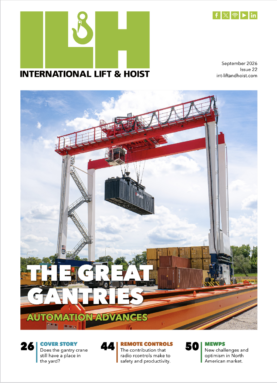
ILH September 2026
In this month's issue