
)
Lechman Terminais orders Kalmar electric empty container handlers
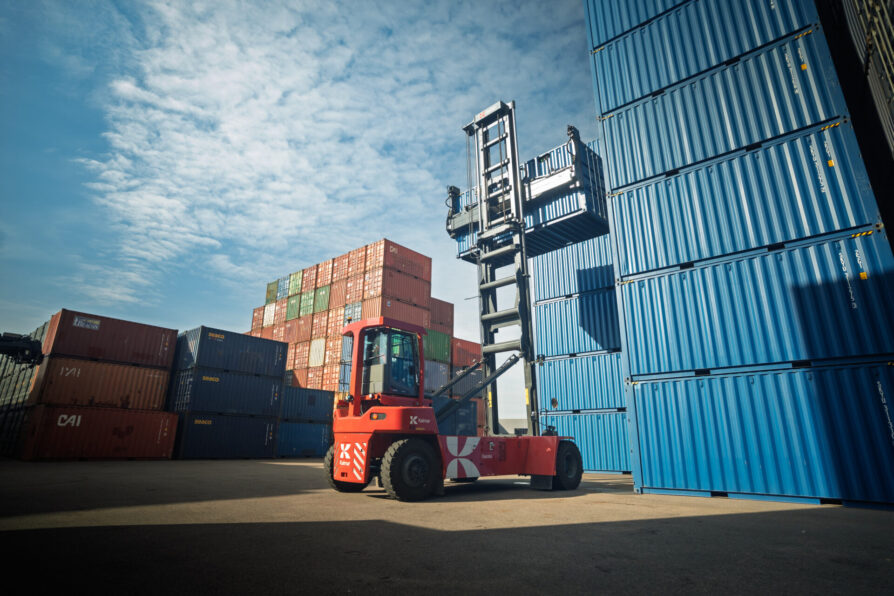
Kalmar has secured an order from long-term customer Lechman Terminais in Brazil for six Kalmar electric empty container handlers. The order was booked in Kalmar’s Q2 2026 order intake with delivery scheduled for Q1 of 2027.
The new electric empty container handlers will operate in a container depot in the town of Guarujá, located in the hinterland of the Port of Santos. The equipment is capable of stacking containers seven-high, and features the highest capacity of 400kWh batteries, ensuring operational continuity beyond a full work shift. Various safety components, such as reverse warning system, safety cameras and fire suppression system as well as high-performance and ergonomically designed Ego Cabin ensure more comfort and safe operations.
All equipment includes the MyKalmar Insight performance management tool with the Inspector module, a digital application that streamlines routine inspections of material-handling equipment and allows inspection data to be stored centrally for analysis and reporting purposes.
Altamir Lecham, president and director of Lechman Terminais said, “Having Kalmar as our partner provides us with great peace of mind, as their machines are of exceptional quality, ensuring we can operate efficiently and safely. Additionally, we are taking a significant step toward reducing our CO2 emissions, which is important for us and our customers.”
Marcelo Macedo Goncalves, vice president of Kalmar Latin America said, “This order marks an important milestone for us as it is the first order of new-generation electric empty container handlers to Latin America. We are proud to continue our partnership with Lechman, and we remain firmly committed to providing the professional after-sales support and training necessary to ensure Lechman succeeds in its electrification journey. With the cost of diesel rising exponentially, and pressure to increase efficiency and reduce emissions, electrification offers a reliable path to continuous operation, mitigating risks posed by current global volatility.”

ILH free trial
Click here to get your free copy of ILH magazine and the bi-weekly e-Newsletter
New Issue
ILH September 2026
In this month's issue