
)
Business resilience starts with people, adaptability and long-term vision
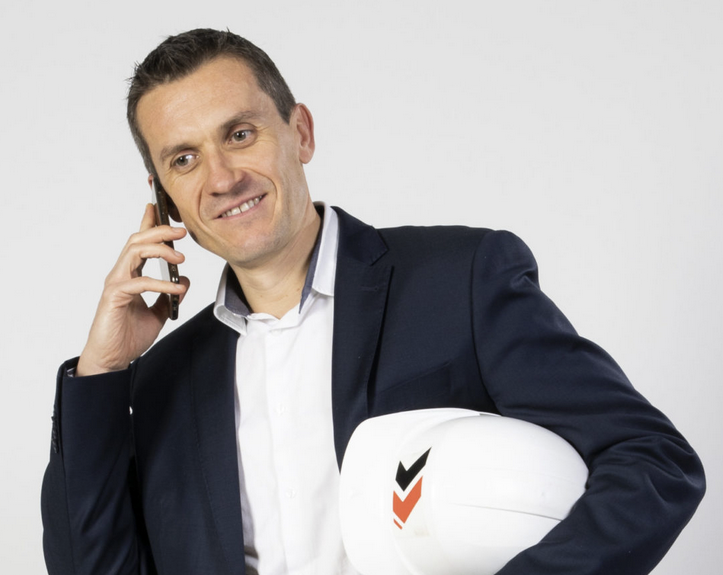
Sébastien Martineau, executive vice president at Haulotte emphasizes the importance of ongoing evolution, agility and a human touch.
In today’s environment, business resilience is often associated with financial strength, industrial capacity or technological innovation. While these elements are of course important, I believe resilience starts elsewhere first: with people, adaptability and the capacity of an organization to evolve over time without losing sight of its identity and long-term vision.
The access industry has changed significantly over the past years. Customer expectations are evolving faster, projects are becoming more complex, sustainability requirements are accelerating, and competition is intensifying globally. In such a context, resilience cannot simply mean resisting change. It means being able to adapt, remain agile and keep moving forward collectively.
At Haulotte, this conviction has progressively shaped the way we approach transformation.
One of the key lessons we have learned is that agility is not only a matter of processes or organization charts. It largely depends on culture and mindset. Companies need teams that listen to the market, understand customer realities, collaborate across functions and adapt quickly when priorities evolve.
This is especially true in an international environment. Having teams close to local markets helps us better understand the diversity of applications, customer expectations and regional dynamics. In a fast-changing industry, proximity and the ability to maintain strong connections with customers and partners are essential components of resilience.
For us, resilience is also closely linked to continuity. Beyond products and technologies, it is about being able to support customers over time, maintain strong relationships and remain present through changing market conditions.
This long-term approach is reflected in our business model. Haulotte manages the entire value chain, from design and manufacturing to commercialization and customer support. This integrated approach allows us to maintain consistency, preserve critical expertise internally, and react faster to evolving market conditions while staying closely connected to field realities.
It is also supported by our international footprint and our exclusive network of subsidiaries. Having local teams operating close to customers creates a direct connection with market expectations and day-to-day challenges. More importantly, these teams have demonstrated strong commitment and adaptability through periods of uncertainty and transformation. They have remained present alongside customers, maintaining support, dialogue and continuity even in challenging times.
In many ways, resilience is built through these long-term human relationships. Trust cannot be improvised during periods of instability. It is built progressively through consistency, responsiveness and proximity over time.
Another important aspect of resilience, in our experience, is the ability to balance continuity and transformation. At Haulotte, we have learned over the years that evolving does not mean changing who we are. It means adapting progressively while remaining consistent with our culture, our values and our long-term commitments.
This is particularly true when it comes to innovation. In our industry, innovation only makes sense if it responds to real operational needs experienced in the field by customers, operators, technicians or rental companies. Many of our developments, whether related to electrification, digital services or support solutions, are driven by this close connection with day-to-day realities on jobsites and in fleet operations.
What has also helped us navigate periods of transformation is the collaborative mindset that exists across our teams and subsidiaries. In a constantly evolving environment, resilience is not about having all the answers immediately. It is about staying open, learning quickly, adapting and moving forward collectively.
Increasing competition and faster-changing market dynamics continue to challenge all players in our industry. For us, this reinforces the importance of staying agile, pragmatic and humble enough to continuously question ourselves and evolve the way we operate.
In our view, resilient organizations are also those capable of maintaining trust during periods of change: trust between teams, with partners and with customers. Building this trust takes time, consistency and transparency. It becomes a decisive strength when markets become more uncertain and demanding.
Finally, resilience is not a destination. It is an ongoing process of adaptation, learning and collective progress. In a world where change continues to accelerate, long-term resilience increasingly relies on agility, continuous learning and the capacity to evolve without losing sight of what fundamentally defines the company.
For our industry, this means continuing to innovate, adapt and transform while never losing focus on the people within the company within the company – the teams who drive, support and enable this transformation every day.

ILH free trial
Click here to get your free copy of ILH magazine and the bi-weekly e-Newsletter
New Issue
ILH September 2026
In this month's issue