
)
Welding pipelines
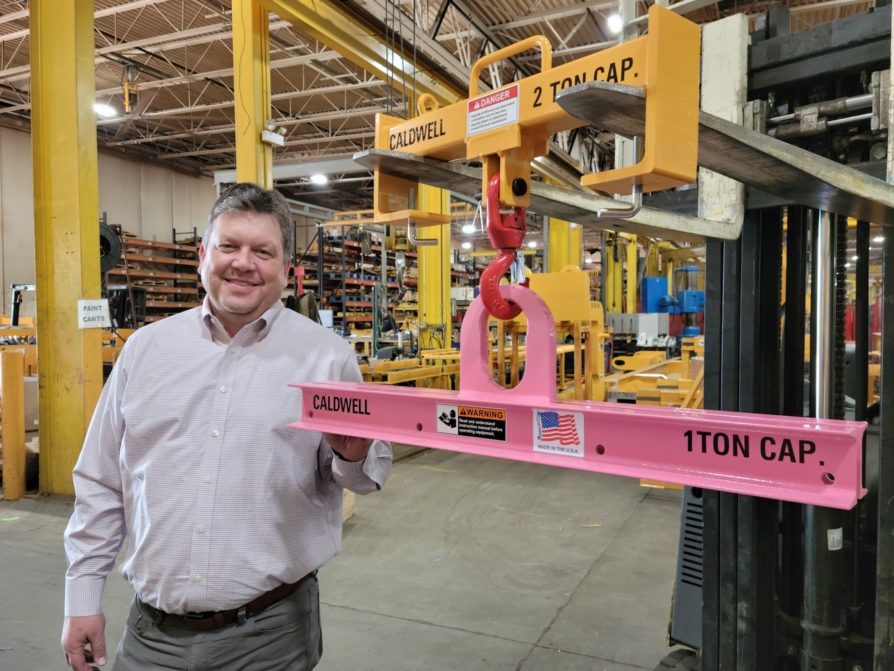
It’s one thing to recognise a problem like a shortage of welders, but quite another to drive meaningful change, says Doug Stitt, president and CEO at The Caldwell Group Inc.
The trouble with problems is that they can be easy to identify but harder to fix. Further, the more we talk about them – economic uncertainty, trade tensions, high debt, technological disruption, talent shortages, etc – the more entrenched they become. We can all relate to trade groups and committees that reconvene every six months or so and have the same conversations about the same issues without ever arriving at the solutions.
It’s not always because of bad faith. Trade bodies and peer groups are structurally prone to talking about problems more than fixing them. Such groups largely exist to represent many interests. Real change usually creates winners and losers, so the safest path is broad agreement on the problem rather than commitment to a solution. Talking keeps everyone aligned; acting risks alienating members.
Highlighting a shortage, risk, or crisis justifies the organisation’s relevance; supports lobbying and grant applications; and fuels reports, panels, conferences, and white papers. Solving the problem can actually undercut the narrative that sustains the organisation’s influence. It might also highlight previous shortcomings that are better brushed under the carpet.
Then consider that solutions equate to costs. Meaningful change, such as training reform, accreditation overhaul, enforcement, or cultural evolution requires money, political capital, and member compliance. Many trade bodies don’t have the authority to compel change, only to recommend it. So, discussion becomes the default output.
Nailing down those responsible is a challenge too. I’ve been in many rooms where the education sector, government, employers and employees all nod along in agreement of a problem, but when one demographic is challenged to drive change, they point across to another group and a conflict ensues. In other words, everyone agrees there’s a problem; no one owns it.
Here in the US, we’re fond of white papers and published works that serve as roadmaps. They often have a catchy tagline – ‘The Road to 2036’, for example – but often only serve as another vehicle for the problems. If anything, they celebrate the issues and champion their existence. I’ve witnessed widespread fanfare about a body of work reaching its conclusion, only to narrow down a dozen points of immediate concern to a sector or industry.
To linger on the US for a while longer, we are still facing a significant shortfall in the number of new welders coming into the workforce compared with industry demand. Multiple recent industry-wide forecasts and labour-market reports show that demand is outpacing supply by a wide margin, and this gap is expected to persist through the rest of the decade. Demand for welders remains strong across manufacturing, construction, energy, infrastructure, and defence sectors, partly due to industrial growth, infrastructure investment, and specialised welding needs.
Even though trade school enrolment and interest in skilled trades have risen somewhat, new entrants aren’t keeping pace with the number of retirees and openings. Both industry and education have historically done a limited job of engaging young people in trades like welding and industrial engineering. Too often, these careers are under-promoted, leaving students unaware of the opportunities, earning potential, and professional respect available in the skilled trades.
The welder shortage is a global phenomenon, not just a US issue. Around the world, many industrialised and emerging economies are struggling to train and retain enough skilled welders to meet ongoing demand. Mainland Europe faces a significant shortage of qualified welders, while the UK is confronting a critical skills gap, with about half the welding workforce nearing retirement. Australia is estimated to need tens of thousands more welders than current training outputs can supply. In each instance, many of the same problems are shared; we could produce a glossy report about it: ‘The World’s Broken Welding Pipeline’ or ‘The Global Welding Talent Pipeline: Crisis and Opportunity’.
Back to school
I prefer to talk about the solutions, especially with a woe like welding. Going back to the drawing board isn’t enough; we need to go back to school, as an initiative that’s gathering pace at my company proves. I share it not as a success story, but more of a blueprint to use as a contributor or catalyst to change in your supply chain. We have set a clear goal to help fuel our pipeline of welders by reaching students who already have an interest in and talent for welding. We want to expose them to the great opportunities welding and lifting can offer and help them see what a strong career path manufacturing can be.
We’re not the first organisation in the world to try to meet the problem with a solution, but the scale of our efforts demonstrates the necessity of reversing current trends. Industrial companies have traditionally relied on a mix of job boards and classified ads, employee referrals, staffing agencies, and tenuous partnerships with trade schools or vocational programmes to recruit skilled workers. Local advertising, such as on-site signage, and connections through unions or professional associations are also common. But these strategies merely magnify the problem.
Our programme is about far more than making life easier for employers or simply fuelling a pipeline of welders. By reaching students at a critical point in their education, it is building the very foundation of our industrial future. Every young person inspired, trained, and equipped with welding skills today becomes part of a workforce that will keep factories running, infrastructure projects on track, and innovation moving forward. In an era where skilled labour shortages threaten the pace and quality of industrial growth worldwide, this initiative doesn’t just fill jobs — it protects the resilience, competitiveness, and longevity of entire industries. Its impact is measured not just in numbers, but in the security of our economy, the advancement of technology, and the continuation of trades that are the backbone of modern society.
In addition to the barriers to entry outlined earlier, another of the reasons solutions aren’t always grabbed wholeheartedly is that they sound and feel like hard work. Listing problems is easier. And, true enough, bridging the gap between industry and education isn’t a five-minute job, or solved during a one-hour panel discussion at a convention. The good news, however, is that it is easier than one might imagine getting the education setting on board.
When Amy Garris, our education outreach and executive assistant, connected with high school and community colleges in our area that offer welding to students, they flung their doors open to us. We initially met with staff in person or over the phone to learn about their curriculums, students, and needs. Then we set up tours for them to come to our facility so they could see first-hand what we do.
It’s a clear starting point and one of the reasons why our welding education outreach programme serves as a workforce scheme blueprint for other manufacturing businesses to follow. I’d bet my bottom dollar that other businesses will be as well received by the education sector as we have been. One of the most exciting parts of the journey has been seeing just how eager schools are for real world support and opportunities for their students. More often than not, schools tell us we are welcome anytime and that they truly value the partnership.
Imagine if every manufacturing business did the same thing.

ILH free trial
Click here to get your free copy of ILH magazine and the bi-weekly e-Newsletter
New Issue
ILH September 2026
In this month's issue